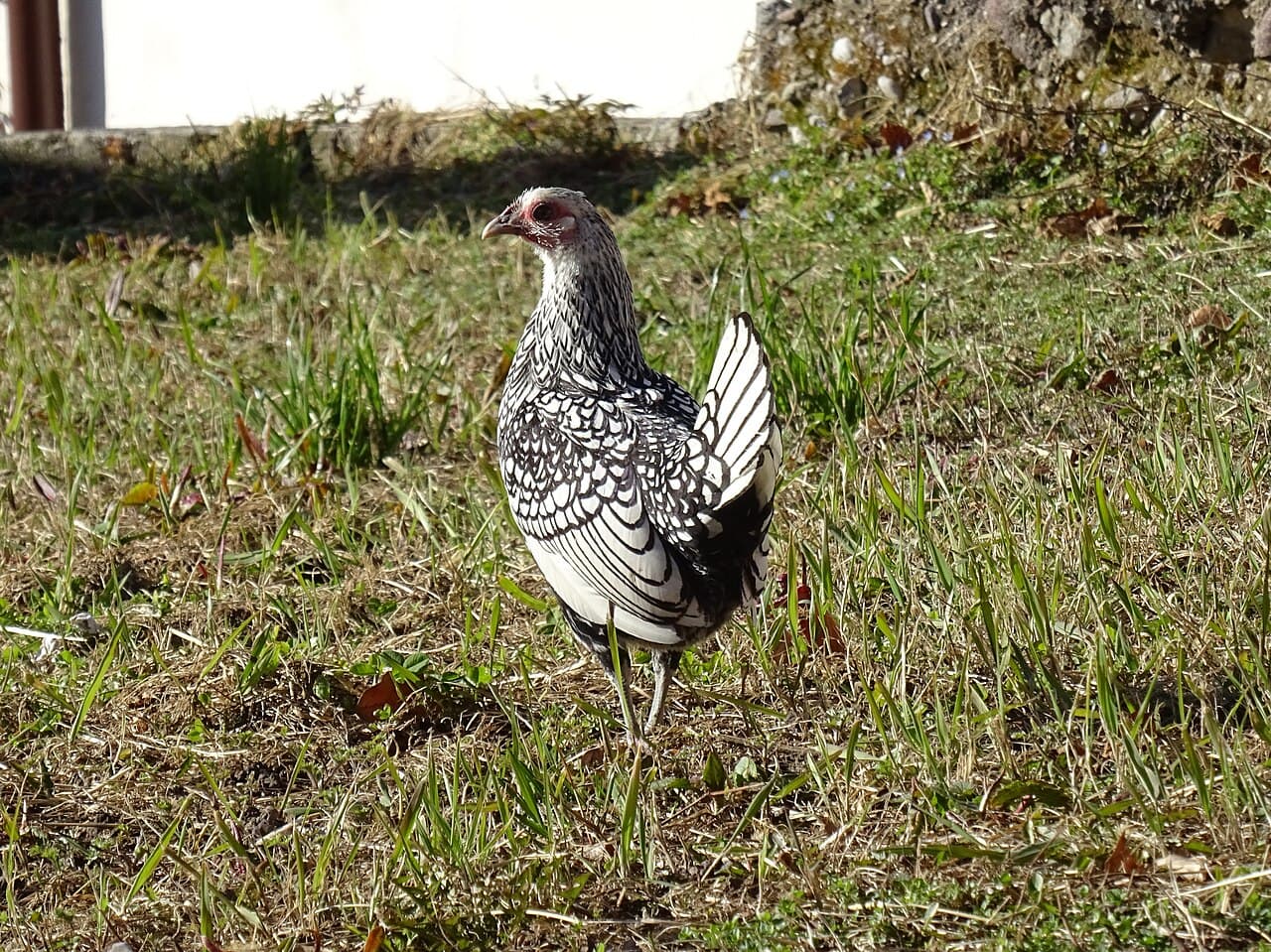
Sebright
Overview
The Sebright is one of the oldest British true bantams, created around 1800 by Sir John Sebright, who spent decades of selective breeding to produce a tiny bird whose every feather — gold or silver — is edged in a crisp black outline. The result looks almost hand-painted, and Sebrights remain one of the most popular ornamental bantams in the world. They're also a genetic curiosity: roosters are 'hen-feathered,' lacking the long sickle, hackle, and saddle feathers of normal males, so both sexes show off the same flawless lacing.
At just 20-22 ounces, Sebrights are busy, sociable little birds. They're friendly when handled young, but their default setting is active and alert — they fly very well, love to perch high, and will happily explore every corner of a run. Expect chatter and motion rather than a lap chicken. Practically speaking, they're a poor production choice: hens lay only 60-80 tiny white eggs a year, almost never go broody, and offer no meat value.
Sebrights also demand a bit more care than the average backyard breed. Chicks are famously delicate and hard to hatch, fertility is lower than most breeds, and the birds' small bodies and large rose combs make them prone to frostbite in hard winters. They do best in mild climates or with a snug, draft-free coop, and a covered run tall enough to accommodate their aerial tendencies. Keep them for their beauty and personality, and they're endlessly rewarding.
Strengths
- ✓Stunning laced plumage on every feather — among the most beautiful chickens ever bred
- ✓Hen-feathered roosters mean both sexes display the same striking pattern
- ✓Tiny size and small appetite suit small yards and ornamental flocks
- ✓Active, curious, and entertaining to watch, with friendly birds when handled young
- ✓A historic true bantam with strong show and exhibition pedigree
Trade-offs
- ✗Very poor layers — only 60-80 tiny eggs per year
- ✗Chicks are fragile with low fertility and hatch rates, making them hard to breed
- ✗Small bodies and large rose combs are prone to frostbite in cold winters
- ✗Excellent fliers that need covered runs to keep contained
- ✗Hens almost never go broody, so hatching requires an incubator or surrogate
Egg counts are typical figures for a healthy hen in her first laying years, not a guarantee — see how this site works.