Polish
Overview
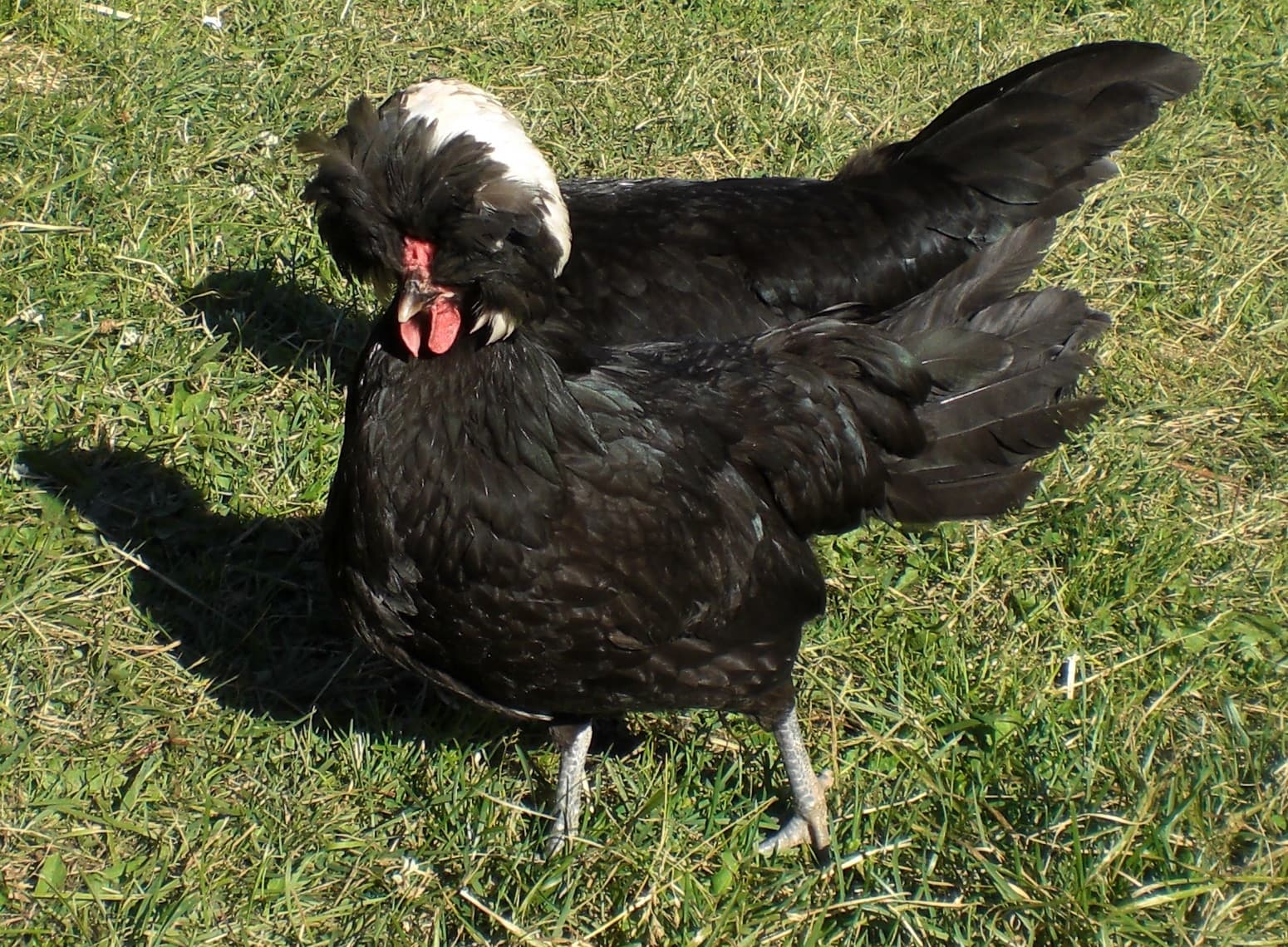
The Polish chicken is the flock's resident comedian, sporting a spectacular pom-pom crest that looks like a feathered top hat. Despite the name, they likely originated in the Netherlands centuries ago — Dutch masters painted them in the 1600s. The White Crested Black variety, with its snow-white crest on a jet-black body, is the most iconic, but they come in gold-laced, silver-laced, buff-laced, and more.
That glorious crest defines everything about keeping them. It blocks their peripheral vision, which makes Polish easy to startle (announce yourself before you reach in to pet one), worse at spotting hawks than other breeds, and vulnerable to feather-picking from flockmates who can't resist pulling at the pom-pom. Many keepers trim the crest around the eyes or keep Polish with other gentle breeds to prevent bullying. Wet or icy crests are a real problem, so they need dry shelter in bad weather.
As layers they're better than their ornamental label suggests — around 150 white eggs a year, and they almost never go broody. They're gentle, quirky, surprisingly good gliders, and endlessly entertaining. Keep them for the personality and the spectacle; the eggs are a bonus.
Strengths
- ✓Unforgettable pom-pom crest — the most entertaining-looking breed around
- ✓Gentle and easily tamed with regular handling
- ✓Decent layer of white eggs (about 150/year) for an ornamental breed
- ✓Almost never goes broody, so laying stays consistent
Trade-offs
- ✗Crest blocks vision, making them easy to startle and hawk-prone
- ✗Frequently bullied and feather-picked in mixed flocks
- ✗Crest needs to stay dry — wet or frozen crests cause real problems
- ✗Skittish when they can't see you coming
- ✗Not cold hardy without a dry, draft-free coop
Egg counts are typical figures for a healthy hen in her first laying years, not a guarantee — see how this site works.