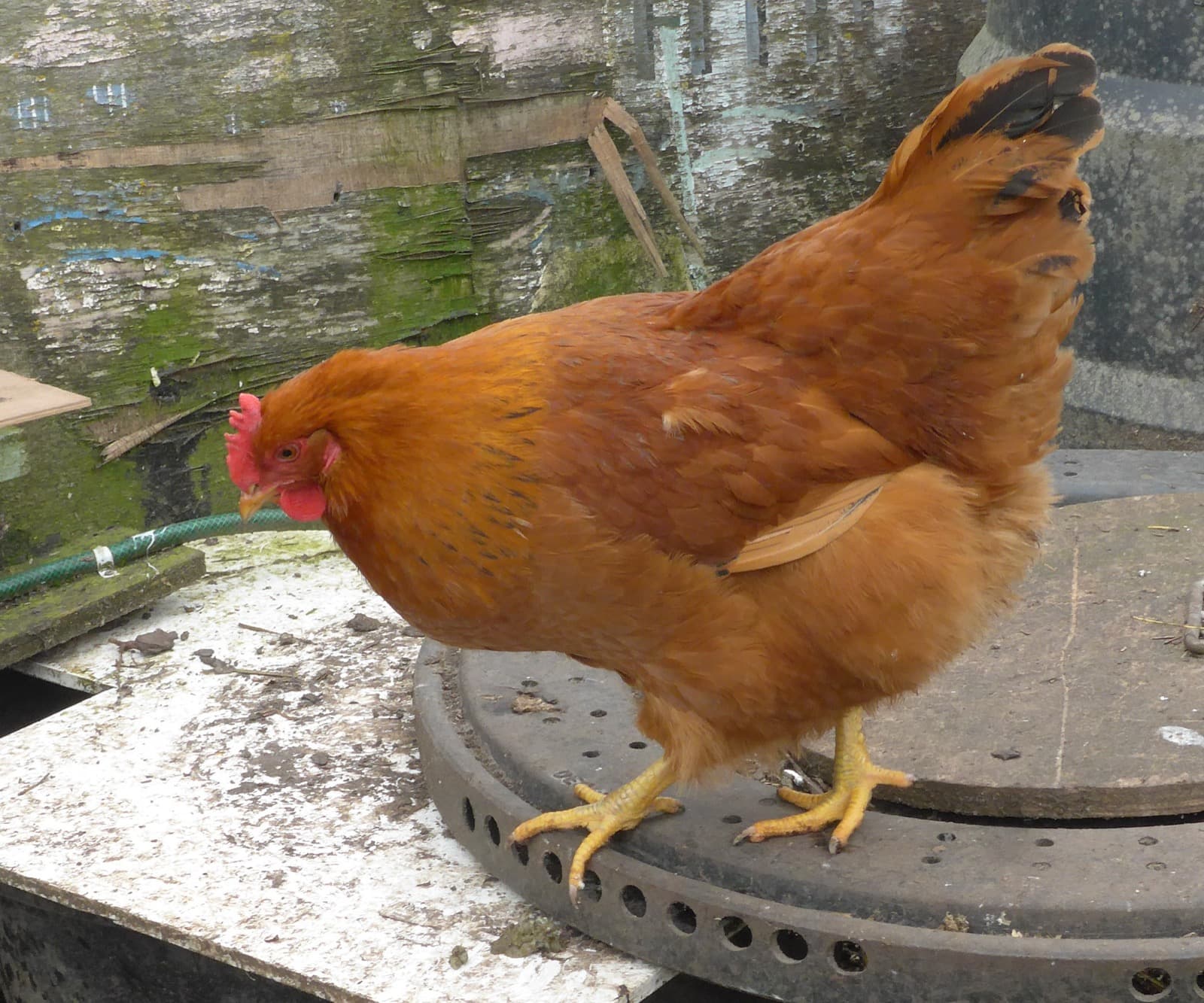
New Hampshire Red
Overview
The New Hampshire Red started as a Rhode Island Red and became something distinctly its own. Beginning around 1915, New Hampshire farmers selectively bred their RIR flocks for one thing: speed. The result, recognized in 1935, matures faster, feathers out quicker, and carries more breast meat than its famous cousin, all wrapped in a lighter chestnut-red plumage compared to the RIR's dark mahogany.
For a homestead that wants both eggs and meat, the New Hampshire is arguably the better-balanced bird. Hens lay around 200 large brown eggs a year — a bit fewer than a Rhode Island Red — but the faster growth and fuller body make surplus cockerels genuinely worth raising for the table. This is the bloodline that fed into the original Chicken of Tomorrow-era broiler programs and the Delaware breed for good reason.
Temperament-wise, expect a confident, food-motivated bird. They're friendly toward people and easy to tame with treats, but they're pushy at the feeder and will claim their spot in the pecking order — pair them with breeds that can hold their own rather than timid ornamentals. They handle both heat and cold well, go broody occasionally, and make attentive mothers. An underrated classic that deserves more backyard attention than it gets.
Strengths
- ✓Faster maturing and meatier than the Rhode Island Red
- ✓Solid layer of about 200 large brown eggs per year
- ✓Genuinely dual-purpose — surplus cockerels are worth raising
- ✓Handles both hot and cold climates well
- ✓Occasional broodiness with excellent mothering ability
Trade-offs
- ✗Assertive at the feeder — can bully timid breeds
- ✗Slightly fewer eggs than its Rhode Island Red cousin
- ✗Plain looks compared to laced or crested breeds
- ✗Often confused with RIRs at feed stores, so lineage can be murky
Egg counts are typical figures for a healthy hen in her first laying years, not a guarantee — see how this site works.