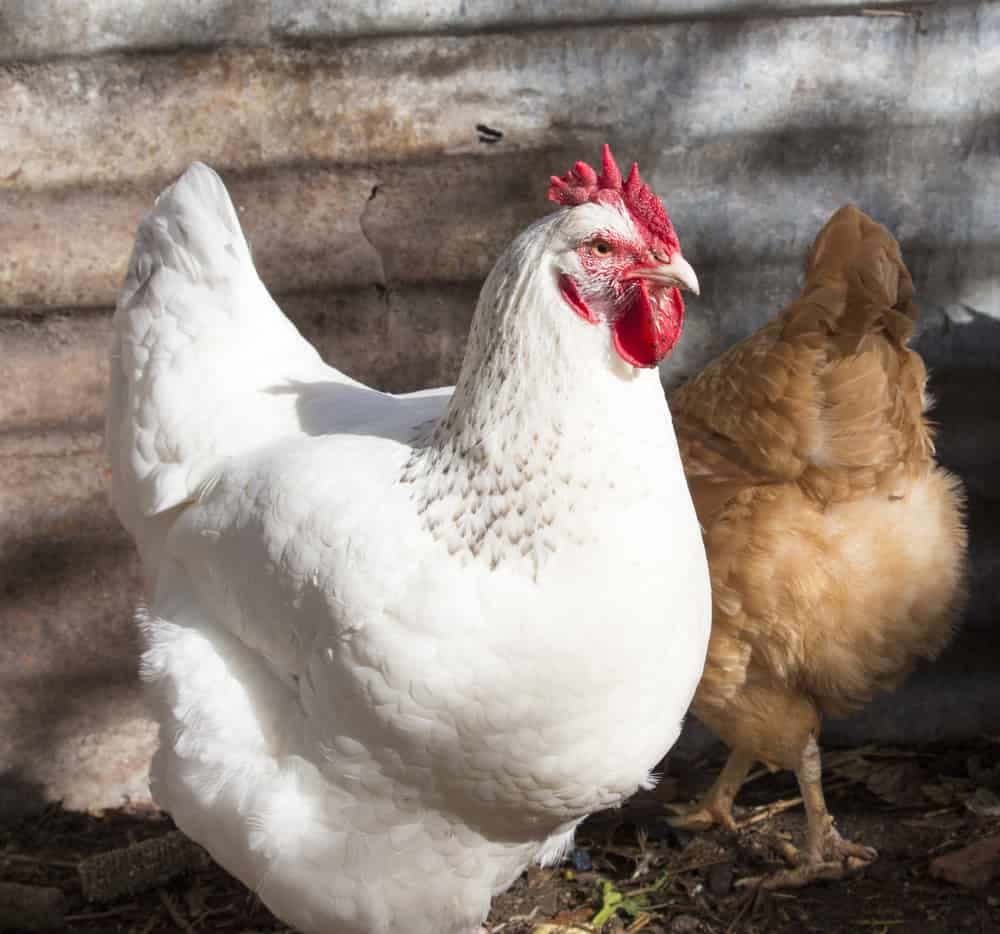
Leghorn
Overview
The Leghorn is the undisputed champion of egg production — these Mediterranean-origin birds lay up to 300 large white eggs per year, which is why they dominate commercial egg farming. The White Leghorn is the most common variety, though they come in over a dozen color variations.
Leghorns are athletic, alert birds that prefer free-ranging to being cooped up. They're excellent fliers and will roost in trees if given the chance. Their light body weight means they eat less feed per egg produced than heavier breeds, making them the most efficient layers you can keep. They handle heat well thanks to their large combs, but those same combs are susceptible to frostbite in cold climates.
These aren't cuddly lap chickens — Leghorns are independent and can be skittish around people. But if your primary goal is maximum egg production with minimum feed cost, no breed comes close to the Leghorn's output.
Strengths
- ✓Highest egg production of any pure breed — up to 300 eggs per year
- ✓Excellent feed-to-egg conversion ratio due to light body weight
- ✓Very heat tolerant, perfect for warm climates
- ✓Almost never go broody, so they keep laying consistently
Trade-offs
- ✗Flighty and nervous — not great as pets or with children
- ✗Large combs are prone to frostbite in cold winters
- ✗Noisy compared to many other breeds
- ✗Can fly over standard fences easily
- ✗Not a good dual-purpose bird due to small body size
Egg counts are typical figures for a healthy hen in her first laying years, not a guarantee — see how this site works.