Hamburg
Overview
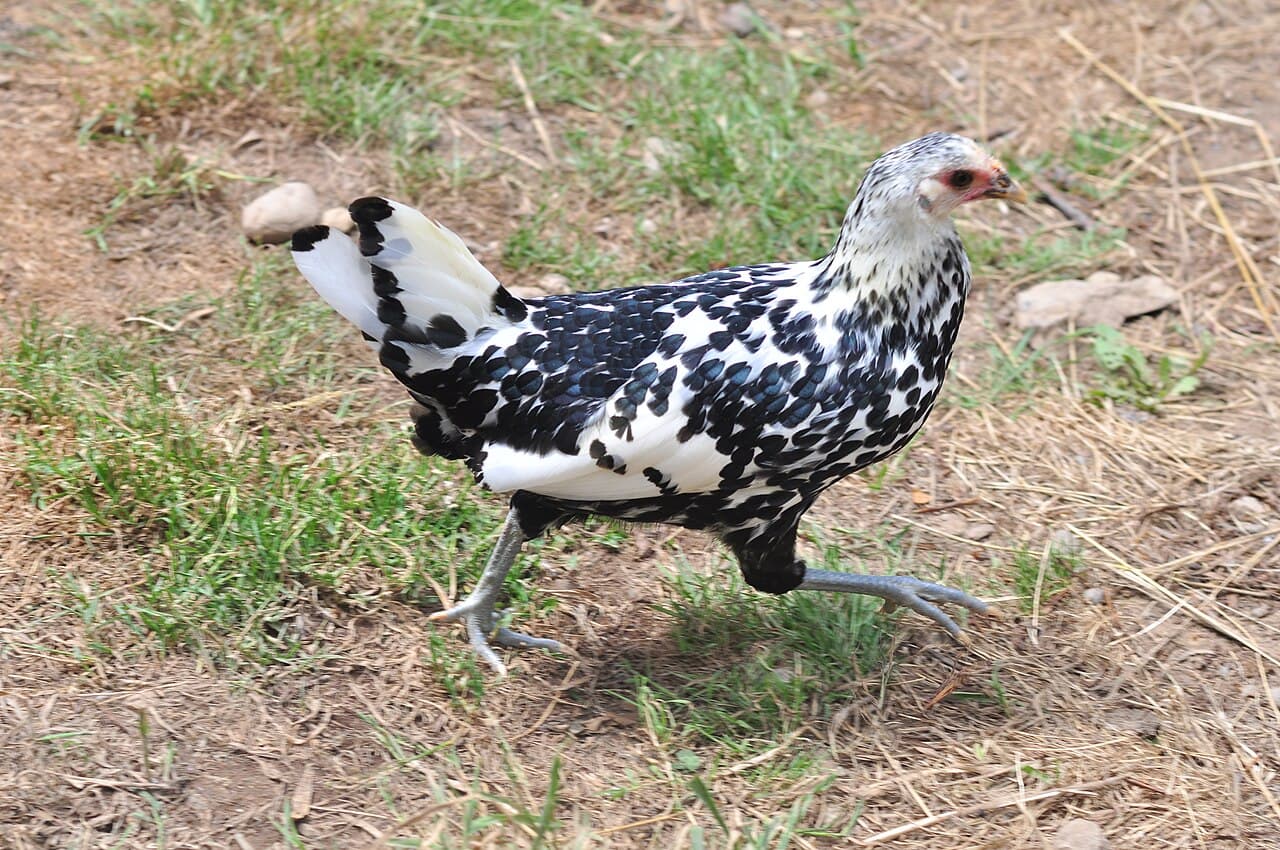
Despite the German name, the Hamburg was refined centuries ago in Holland and England, where it earned the nickname 'Dutch Everyday Layer' for its steady output of white eggs. It's one of the oldest recognized breeds in Europe, and its glamour is undeniable — the Silver Spangled variety is covered in crisp black 'moons' on white feathers, while penciled and self-colored varieties add to six recognized color patterns, all topped with a neat rose comb and slate-blue legs.
Hamburgs are the definition of a self-sufficient chicken. These small, athletic birds are outstanding foragers and expert flyers that will happily roost in trees, dodge predators, and find much of their own food on range — which makes them wonderfully cheap to feed but genuinely difficult to confine. They're alert and flighty by nature: beautiful to watch, quick to flee, and rarely interested in being held. Small yards with low fences will frustrate them (and you).
As layers they're quietly excellent. Hens produce roughly 120-225 small-to-medium white eggs per year depending on strain, and their real gift is longevity — they keep laying respectably for several years after production breeds have faded, and they almost never lose time to broodiness. The rose comb resists frostbite, making them hardier in winter than their slim build suggests. For free-range keepers who want an efficient, long-lived layer with showstopper looks, the Hamburg is a heritage gem.
Strengths
- ✓Efficient layer of white eggs that keeps producing well for years, not just one season
- ✓Spectacular plumage — the Silver Spangled variety is one of the prettiest chickens anywhere
- ✓Outstanding forager that finds much of its own food, keeping feed bills low
- ✓Rose comb resists frostbite, giving good winter hardiness despite a small body
- ✓Predator-savvy and quick, thriving in free-range setups
Trade-offs
- ✗Flighty and independent — dislikes handling and rarely tames into a pet
- ✗Excellent flyer that clears fences easily and may roost in trees; hard to confine
- ✗Eggs are on the small side compared to production layers
- ✗Too small and slight to be worth raising for meat
Egg counts are typical figures for a healthy hen in her first laying years, not a guarantee — see how this site works.