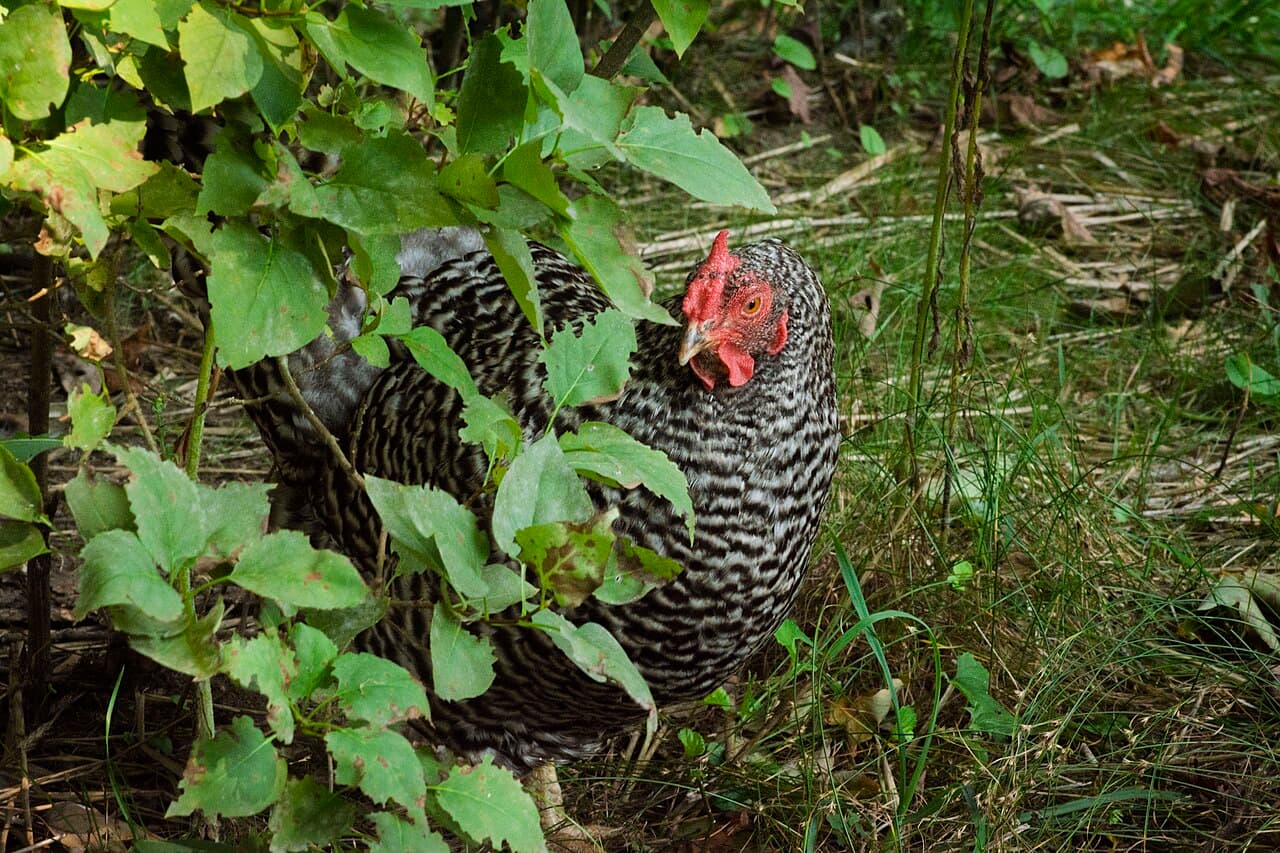
Dominique
Overview
The Dominique is considered America's oldest chicken breed, descended from birds brought over by colonists from southern England and well established by about 1750. These barred 'Pilgrim fowl' scratched out a living alongside pioneer families for two centuries, and that heritage shows: Dominiques were bred to survive on forage, weather, and neglect long before commercial feed existed. The breed nearly vanished in the 20th century but was rescued by dedicated breeders and remains a conservation favorite today.
At a glance Dominiques resemble Barred Plymouth Rocks, but the differences matter. The Dominique wears a staggered, irregular 'cuckoo' barring rather than the Rock's crisp parallel bars, and it carries a low rose comb with a curved spike instead of a tall single comb — which, along with tight plumage, makes it notably resistant to frostbite. Hens are modest-sized at around 5 pounds, so they lay efficiently for their feed intake: historically 230-275 medium brown eggs a year, with good mothering instincts and a moderate tendency to go broody.
Temperament is where Dominiques win hearts. They're calm, friendly, and steady — gentle with kids, easygoing in mixed flocks, and excellent free-rangers that stay alert to hawks while finding much of their own food. Roosters are typically less aggressive than many dual-purpose breeds. For a backyard keeper who wants a self-reliant, personable layer with genuine early-American history, the Dominique is an easy recommendation.
Strengths
- ✓Strong layer for a heritage breed — historically 230-275 medium brown eggs a year
- ✓Rose comb and tight feathering make it highly resistant to frostbite
- ✓Calm, friendly, and gentle — a great choice for families and mixed flocks
- ✓Thrifty forager bred to fend for itself, keeping feed costs down
- ✓America's oldest breed; keeping them supports living heritage conservation
Trade-offs
- ✗Eggs run medium rather than large or jumbo
- ✗Moderate broodiness can pause laying if hens decide to sit
- ✗Smaller carcass than dedicated meat or heavier dual-purpose breeds
- ✗Easily confused with Barred Rocks, and quality strains take effort to find
- ✗Active foragers that are happiest with room to range, not tight confinement
Egg counts are typical figures for a healthy hen in her first laying years, not a guarantee — see how this site works.