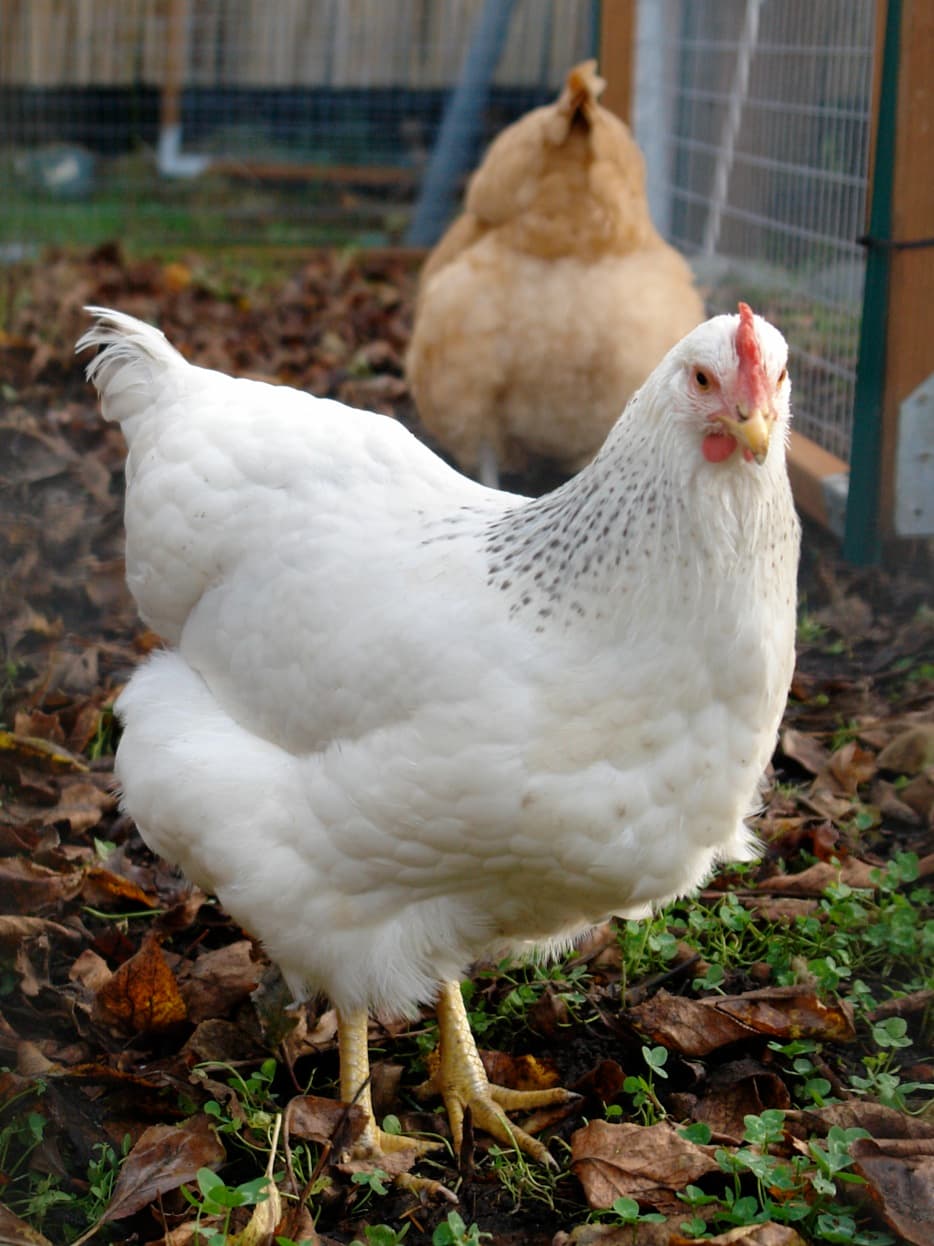
Delaware
Overview
The Delaware was born in 1940 when George Ellis of Indian River, Delaware, crossed Barred Plymouth Rock roosters with New Hampshire hens, keeping the striking white 'sports' with black-barred hackles and tails. For about a decade the Delaware ruled the East Coast broiler industry — fast-growing, meaty, and clean-picking thanks to its mostly white plumage — before the commercial Cornish Cross swept it aside. Today it's a Livestock Conservancy-listed heritage breed making a well-deserved comeback on homesteads.
As a dual-purpose bird, the Delaware is one of the best of the heritage breeds. Hens lay around 4 large to jumbo brown eggs per week — roughly 200-280 a year — and keep laying reasonably well through winter, while the cockerels mature faster than almost any other heritage breed and dress out into an excellent table bird. They're also practical to keep: hardy in both heat and cold, though their large single combs benefit from frostbite protection in severe winters.
Temperament-wise, Delawares are calm and people-oriented — chatty, curious birds that follow their keepers around the yard, though they're more companionable than cuddly. They forage enthusiastically, hold their own in a mixed flock without being bullies, and rarely go broody, so plan on an incubator if you want chicks. For anyone wanting a single self-sufficient breed that covers eggs, meat, and personality, the Delaware is a superb choice that also supports heritage conservation.
Strengths
- ✓True dual-purpose performer — 200+ large brown eggs a year plus an excellent table bird
- ✓One of the fastest-maturing heritage breeds, a legacy of its broiler-industry origins
- ✓Calm, curious, and friendly — follows keepers around and mixes well in flocks
- ✓Hardy in both cold winters and hot summers, and a capable forager
Trade-offs
- ✗Large single combs can get frostbite in severe cold without protection
- ✗Rarely goes broody, so hatching chicks requires an incubator
- ✗Harder to find than mainstream breeds, and hatchery quality varies
- ✗Mostly white plumage makes free-rangers more visible to predators
- ✗Assertive enough to dominate very timid breeds in a mixed flock
Egg counts are typical figures for a healthy hen in her first laying years, not a guarantee — see how this site works.