Cochin
Overview
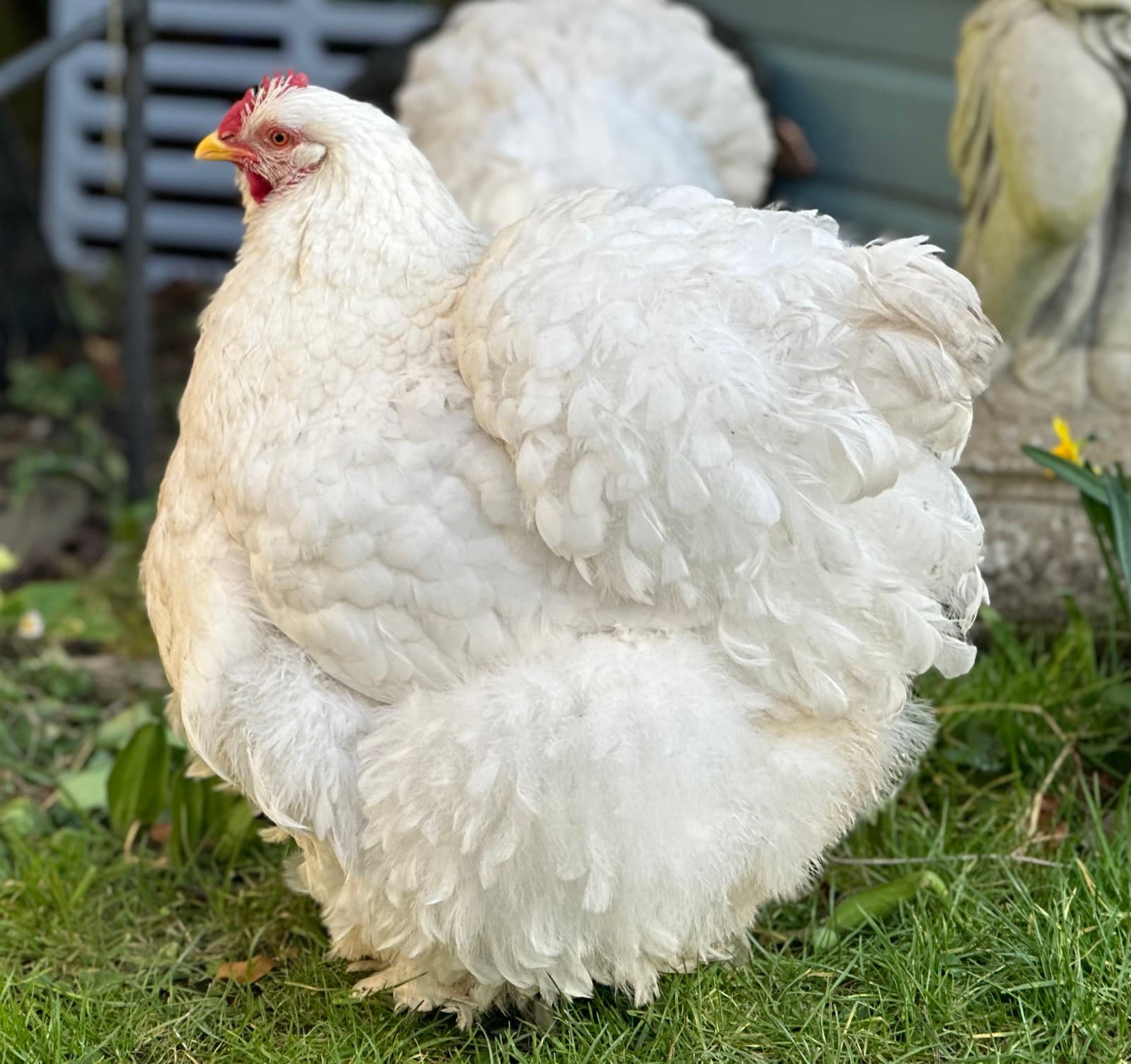
The Cochin is a massive ball of feathers with a chicken somewhere inside. Imported from China in the 1840s, they ignited the Victorian 'hen fever' craze — Queen Victoria kept them — and it's easy to see why. Everything about a Cochin is round and fluffy: dense plumage covers them from head to heavily feathered feet, making them look even bigger than their already impressive 8-11 pounds.
Cochins are among the most docile chickens in existence, rivaling Silkies and Orpingtons as pets. They tolerate handling beautifully, rarely fuss, and their poor flying ability means a two-foot fence keeps them contained. They're also legendary broodies — a Cochin hen will hatch anything you slide under her, including duck and turkey eggs, and many keepers maintain a Cochin or two purely as the flock's incubator and foster mom.
The tradeoffs are practical: they're modest layers of around 160 medium light-brown eggs a year, their foot feathering collects mud and can freeze in slushy winters, and all that fluff hides body condition, so obesity sneaks up on them. Their dense feathering makes them superb in cold, dry climates but a liability in hot, humid ones. Keep them dry, watch the treats, and they'll be the calmest, fluffiest members of your flock for years.
Strengths
- ✓One of the most docile breeds — outstanding pets for children
- ✓Legendary broody hens that will hatch and mother anything
- ✓Dense feathering makes them extremely cold hardy
- ✓Can't fly, so low fences and simple runs contain them easily
Trade-offs
- ✗Modest egg production of about 160 per year
- ✗Frequent broodiness interrupts laying for weeks at a time
- ✗Feathered feet collect mud and are prone to frostbite in wet winters
- ✗Prone to obesity — feed needs careful management
- ✗Heavy feathering causes overheating in hot, humid climates
Egg counts are typical figures for a healthy hen in her first laying years, not a guarantee — see how this site works.