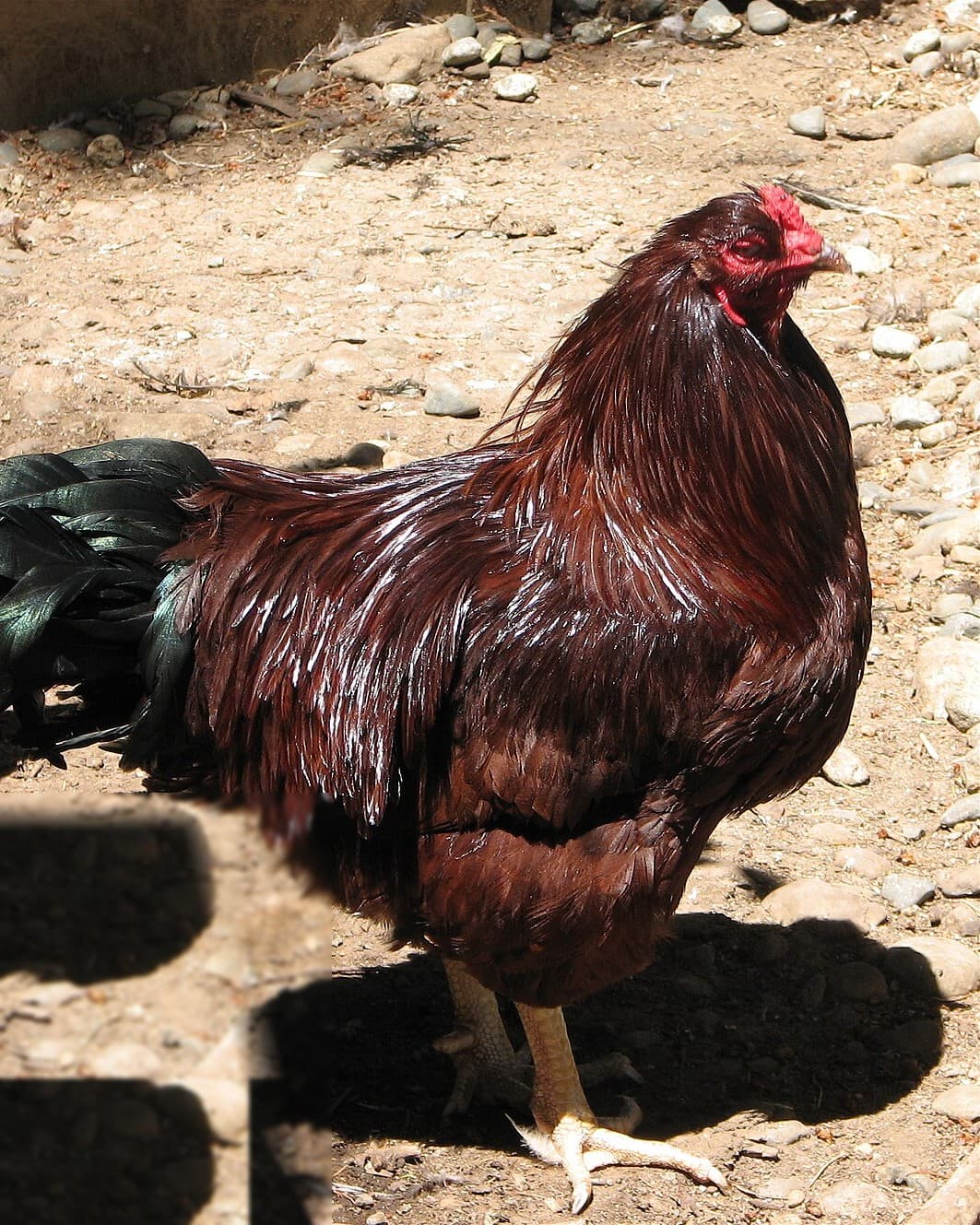
Buckeye
Overview
The Buckeye was created in the 1890s in Warren, Ohio, by Nettie Metcalf, making it the only breed in the American Poultry Association's American Class credited entirely to a woman. Metcalf crossed Buff Cochins, Barred Rocks, and black-breasted red game birds to build a rugged, deep-mahogany dual-purpose chicken that could shrug off brutal Midwest winters — and named it after Ohio, the Buckeye State.
Winter hardiness is the Buckeye's superpower. It's the only American Class breed with a pea comb, which sits tight against the head, and its wattles are small too, so frostbite is almost a non-issue even in severe cold. The game-bird ancestry shows in its slanted, muscular frame and its personality: Buckeyes are busy, confident foragers famous among breeders for actively hunting mice and other small pests — a genuinely useful barnyard trait. They're friendly toward people and disinclined to feather-pick, though they want room to roam and get restless in tight confinement.
Production is solid on both fronts. Hens lay roughly 150-240 medium-to-large brown eggs a year (well-bred strains at the higher end) and keep going through winter, while the heavy 9-pound cocks make an excellent, flavorful table bird with meaty thighs. Hens go broody moderately often and make good mothers. Once nearly extinct, the Buckeye has rebounded thanks to conservation breeders — a hardy, characterful pick for cold-climate homesteads that also preserves a genuine piece of American poultry history.
Strengths
- ✓Outstanding cold hardiness — tight pea comb and small wattles make frostbite very unlikely
- ✓Famous mousers that actively hunt rodents and pests around the barnyard
- ✓Solid dual-purpose output: 150-240 brown eggs a year plus a meaty 9 lb table bird
- ✓Friendly, confident, and notably disinclined to feather-picking
- ✓Unique heritage story — the only American breed developed entirely by a woman
Trade-offs
- ✗Active, game-bird temperament needs space; they get restless in small runs
- ✗Lays fewer eggs than dedicated production breeds like Leghorns or ISA Browns
- ✗Still uncommon — quality stock can take effort to find and costs more
- ✗Roosters are occasionally aggressive, a trace of their game ancestry
- ✗Slower to mature than commercial meat crosses
Egg counts are typical figures for a healthy hen in her first laying years, not a guarantee — see how this site works.