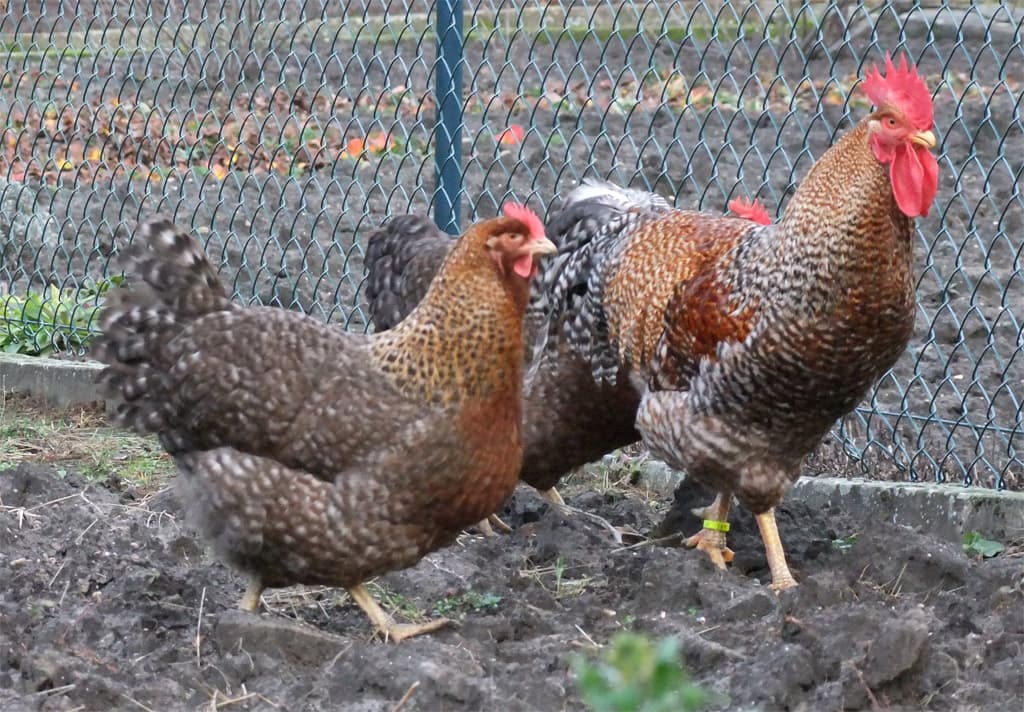
Bielefelder
Overview
The Bielefelder is the chicken that seems too good to be true: a massive, gentle, cold-hardy German breed that lays 200-230 large brown eggs a year AND is autosexing — you can tell males from females at hatch by their down markings, no vent-sexing expert required. Developed in Bielefeld, Germany in the 1970s, it's earned the nickname 'uber chicken' among American keepers since arriving in 2011.
Everything about the Bielefelder is easygoing. Roosters, despite reaching 10-12 pounds, are famous for being among the most docile of any breed — a big deal for families who want to keep a rooster without drama. Hens are calm, friendly, and get along in mixed flocks without bullying or being bullied. Their crele plumage (barred gold, brown, and gray) is handsome on both sexes.
They're genuinely dual-purpose: hens lay big brown eggs (often with attractive speckling) at a rate that rivals far lighter production breeds, while the roosters' size makes them a legitimate table bird. Cold doesn't faze them. The catches are minor: chicks cost more than common breeds, big birds mean bigger coops and feed bills, and their laid-back nature means they do fine in confinement but won't win any foraging contests against flightier breeds.
Strengths
- ✓Autosexing — chicks can be sexed at hatch with high accuracy
- ✓Exceptionally docile roosters, even at 10-12 pounds
- ✓Strong production of large brown eggs (about 220/year) for such a big bird
- ✓True dual-purpose with excellent meat qualities
Trade-offs
- ✗Chicks and hatching eggs cost more than common breeds
- ✗Large birds need more coop space, roost width, and feed
- ✗Still uncommon in the US — may require shipping from specialty breeders
- ✗Relaxed nature makes them middling foragers
Egg counts are typical figures for a healthy hen in her first laying years, not a guarantee — see how this site works.